
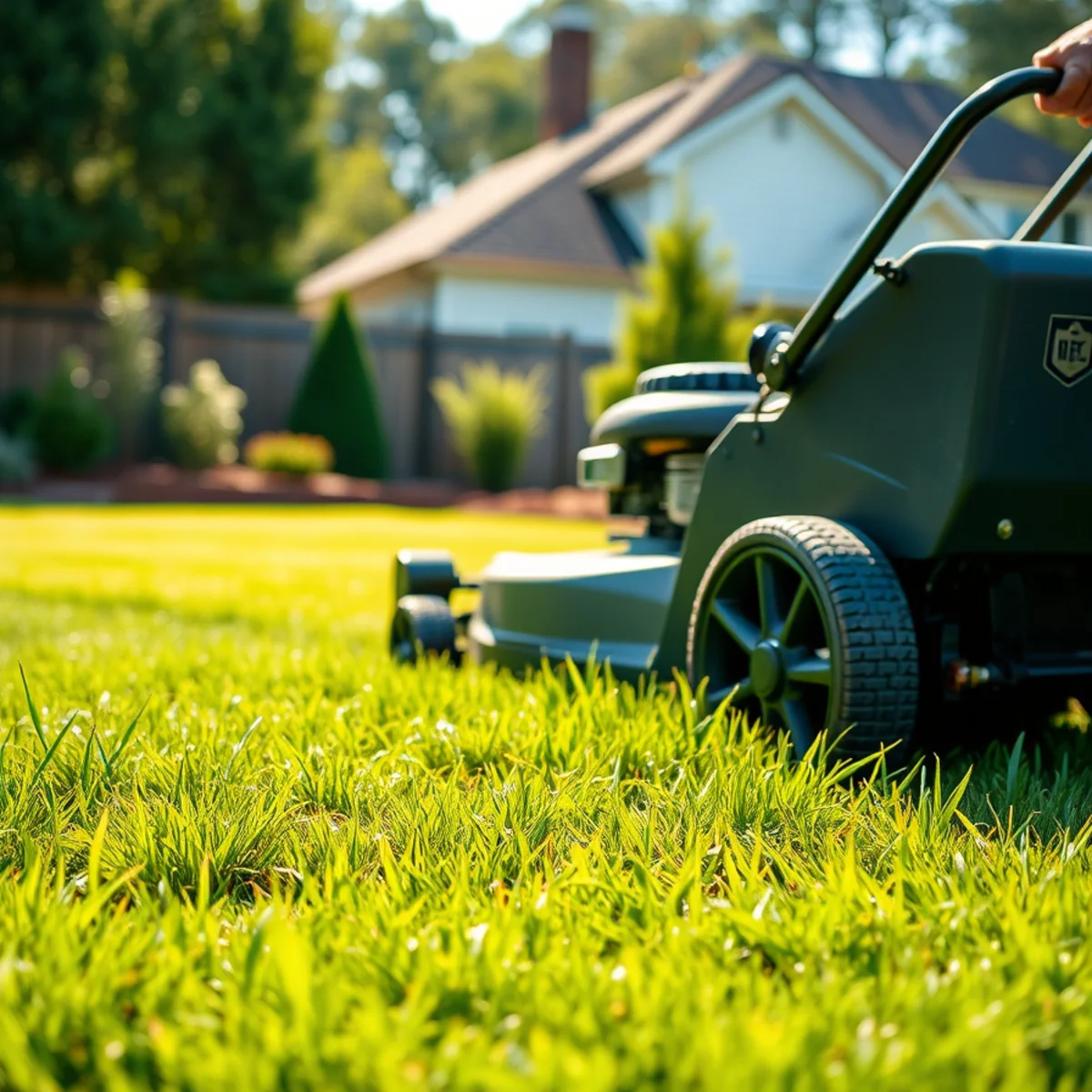
How often should you mow? It is the most common lawn question we hear, and the honest answer is that it depends on your grass and the time of year, not on the calendar day of the week. Mowing on a rigid weekly schedule can either scalp your lawn in a spring growth spurt or let it get shaggy in a slow stretch.
The better approach is to mow by how fast the grass is actually growing and to keep it in the right height range for its type. Get those two things right and you build a thicker, healthier, more drought-resistant lawn that crowds out weeds on its own.
Mowing Frequency by Grass Type
During the peak growing season, warm-season grasses like Bermuda and Zoysia grow fast and often need cutting every five to seven days. Bermuda in particular can outrun a once-a-week schedule in June. Fescue, a cool-season grass, grows fastest in spring and fall and usually needs mowing every seven to ten days then, slowing way down in the heat of summer. The point is to watch the grass, not the calendar.
The One-Third Rule
Here is the single most important rule in mowing: never remove more than one-third of the grass blade in a single cut. If your fescue is supposed to sit at 3 inches, you mow it when it reaches about 4 and a half inches, taking it back down to 3. Cut off more than a third at once and you shock the plant, weaken the roots, and open the door to weeds and disease. In a fast spring flush that may mean mowing twice in one week, and that is perfectly fine.
Pro Tip: If the Grass Got Away From You, Lower in Steps
Came back from vacation to a jungle? Do not scalp it back to target height in one pass. Cut off the top third, let it recover for two or three days, then cut again. Two gentle passes protect the lawn far better than one brutal one.
Right Mowing Heights for Atlanta Grasses
Height is where most homeowners go wrong. Each grass has a range it wants to live in, and taller is usually healthier because longer blades shade the soil, grow deeper roots, and hold moisture. Here are the targets we use across metro Atlanta:
- Bermuda: 1 to 2 inches, kept on the shorter end if you mow often
- Zoysia: 1 to 2 and a half inches, higher in shadier spots
- Tall fescue: 3 to 4 inches, and keep it near 4 through summer for heat protection
- Centipede: about 1 to 2 inches, since it dislikes being cut too short
- St. Augustine: 2 and a half to 4 inches, on the taller side in shade
Sharp Blades Matter More Than You Think
A dull blade tears the grass instead of slicing it, leaving a ragged, frayed tip that turns whitish-tan within a day and gives disease an easy entry point. Sharp blades give a clean cut that heals fast and looks better. We sharpen blades regularly through the season for exactly this reason. If you notice the lawn looks tan the day after mowing, a dull blade is almost always the culprit. Clean edges from our lawn edging service finish the look, but a sharp mower blade is what keeps the turf itself healthy.
Mowing Through the Seasons
Your mowing rhythm should shift with the year. Spring brings a flush of growth as grass wakes up, so you cut more often. Summer heat slows warm-season grass less and cool-season fescue more, and you should raise the deck to shade the soil. Fall is prime growing time for fescue and a good stretch for overseeding, so consistent mowing matters. As frost approaches, warm-season lawns slow and eventually go dormant, and mowing tapers off. Homeowners in Grant Park and Virginia-Highland lean on our weekly and biweekly mowing service so the height stays right as the seasons turn.
Why Scalping Hurts
Scalping means cutting the grass way too short, down to stubble and exposed stems. It feels efficient because you mow less often, but it backfires every time. Scalping starves the plant of the leaf area it needs to feed itself, exposes bare soil to sunlight where crabgrass and other weeds germinate, dries the ground out faster, and weakens the roots so the lawn cannot handle summer stress. A slightly taller lawn is almost always a healthier, greener, more weed-resistant lawn. Pair the right height with a solid fertilization and weed control program and the turf gets dense enough to fight off invaders on its own.
Get a Free Estimate on Reliable Mowing
If keeping up with the right height and frequency is more than you want to manage, let us handle it. PinStripe Landscaping mows at the correct height for your grass, keeps blades sharp, and shows up on a schedule that follows the growing season. We are locally owned, licensed and insured, with free estimates and no long-term contracts. Call or text Marcques at (323) 606-0255.
PinStripe Landscaping & Pro Svcs
Locally owned lawn care & landscaping in Grant Park, Atlanta. Serving Metro Atlanta for 7+ years.