
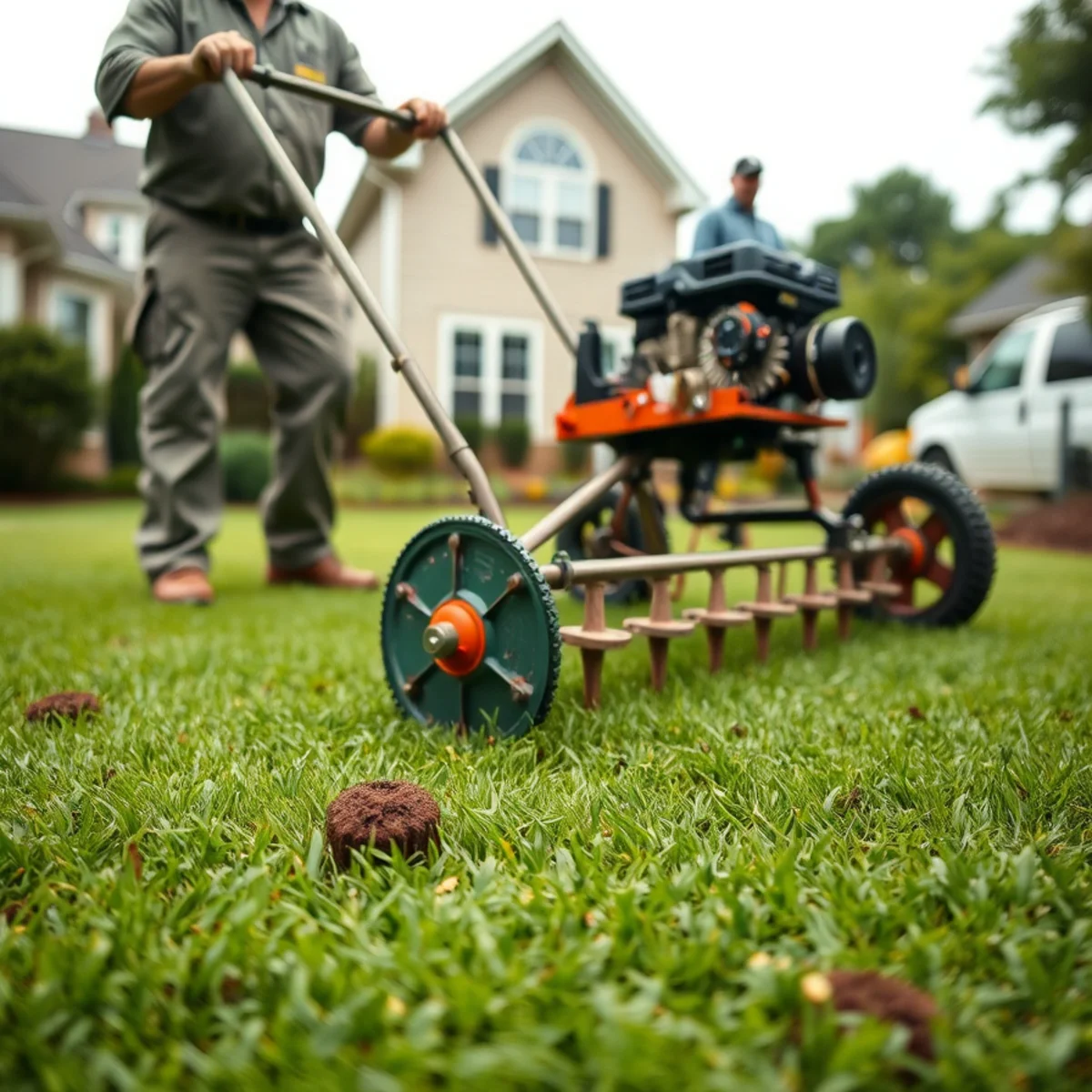
Aeration is the most underrated thing you can do for a Georgia lawn, and timing is everything. Pull cores at the right moment and the grass explodes with new growth. Do it in the wrong season and you can stress the lawn or waste the effort entirely. The right window depends on your grass type.
Our red clay compacts hard, and compacted soil chokes roots no matter how well you mow, water, or feed. Aeration is how you break that cycle. Here is when to do it and why it matters so much in Georgia.
What Aeration Actually Does
Core aeration pulls thousands of small plugs of soil out of your lawn, leaving open channels behind. That simple act fixes a surprising number of problems, especially on our heavy clay.
- Relieves compaction so roots can spread and breathe.
- Lets water soak in instead of running off.
- Opens a path for air and nutrients to reach the root zone.
- Creates the ideal seedbed when you overseed at the same time.
Think of it as opening the windows on a stuffy room. Everything the grass needs can finally get where it belongs.
Timing for Warm-Season Grass
Bermuda, Zoysia, and centipede should be aerated in late spring through early summer, once the grass is fully green and growing hard. That active growth is the whole point, because the lawn needs to be strong enough to heal the holes and fill back in quickly.
Aerate these grasses in the heat of their growing season and they bounce back within a couple of weeks. Pair it with a solid fertilization and weed control program right after, and the grass uses those open channels to push new roots fast. Homeowners in Decatur with sunny Bermuda lawns usually aerate around late May into June for the best response.
Timing for Cool-Season Fescue
Tall fescue is a different animal. Aerate it in early fall, ideally September into October, and pair it with overseeding. This is the single most important thing you can do for a fescue lawn all year.
Fescue does not spread to fill gaps, so it needs new seed each fall to stay thick, and it thins out over our brutal summers. Fall aeration and overseeding drops fresh seed straight into the holes, where it makes perfect contact with the soil and germinates in the cooling weather. Skip it, and fescue lawns thin a little more every year.
Pro Tip: Aerate When Grass Is Growing, Not Dormant
The golden rule is simple. Aerate warm-season grass in late spring and early summer, and aerate fescue in early fall. Never aerate a dormant lawn, because it cannot heal the holes and you just invite weeds into the open soil. Match the timing to your grass and you cannot go wrong.
Signs Your Lawn Needs Aeration
Not sure if it is time? Your lawn usually tells you. Watch for these signals, and if two or three ring true, aeration is overdue.
- Water puddles or runs off instead of soaking in.
- The soil feels rock hard and a screwdriver is tough to push in.
- Grass thins out in high-traffic paths and play areas.
- Thatch has built up into a spongy layer above the soil.
- Roots are shallow and the lawn browns fast in dry spells.
Almost every established lawn on Atlanta clay benefits from aeration at least once a year. High-traffic yards with kids and dogs often want it twice.
Core vs Spike Aeration
Not all aeration is equal, and the difference matters on clay. There are two common methods, and only one really solves compaction.
Core aeration, also called plug aeration, pulls actual plugs of soil out of the ground and is the gold standard for our clay. Spike aeration just pokes holes by pushing soil aside, which can make compaction worse over time by pressing the walls of each hole tighter. On Georgia red clay, always choose core aeration. Those spike shoe attachments are not going to cut it.
Aftercare: Get the Most From Aeration
The days right after aerating are prime time. The soil is open and receptive, so this is when to feed, seed, and water for the biggest payoff. A little effort now goes a long way.
- Leave the soil plugs on the lawn. They break down in a couple of weeks and return nutrients.
- Overseed right away if you have fescue, while the holes are fresh and open.
- Top-dress with a thin layer of compost to work organic matter into the soil.
- Water consistently to help new seed and roots establish.
- Hold off on pre-emergent if you just seeded, since it stops grass seed from sprouting too, and regular mowing can resume once the lawn recovers.
Get a Free Estimate From PinStripe
Ready to give your lawn room to breathe? We aerate lawns all over metro Atlanta, from sunny Bermuda yards to shaded fescue lots in Dunwoody, with the right timing and real core equipment, and we can seed and feed in the same visit. Free estimates, no long-term contracts, and same-day service when we can fit you in. Call PinStripe at (323) 606-0255 and let us get your roots the air, water, and space they need.
PinStripe Landscaping & Pro Svcs
Locally owned lawn care & landscaping in Grant Park, Atlanta. Serving Metro Atlanta for 7+ years.