
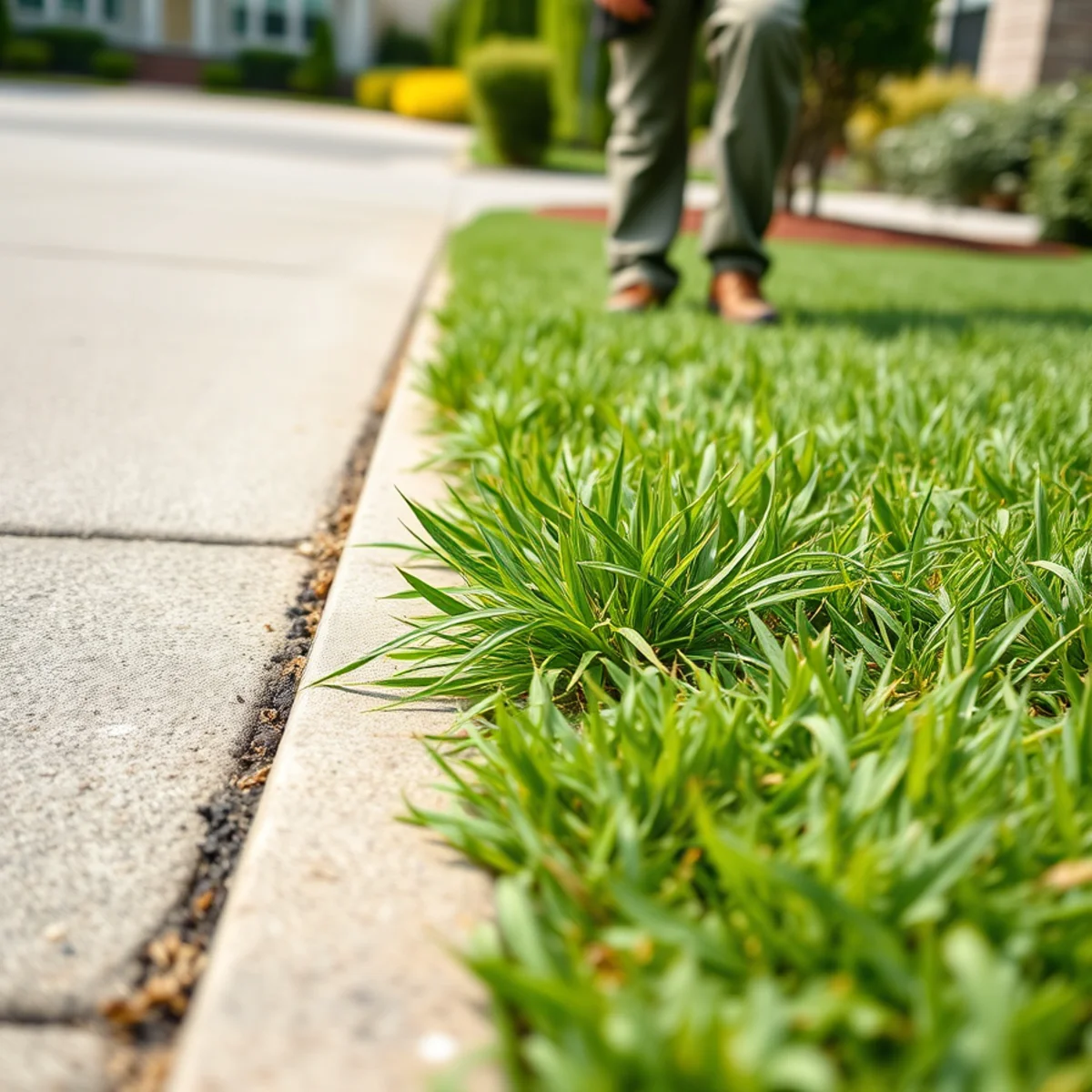
Crabgrass is the weed we get the most calls about. It creeps in during July as a low, star-shaped clump sprawling along the driveway and the thin strip by the sidewalk. By August it has muscled out the good grass and gone to seed. The hard truth is that once you can see it, the fight for this season is nearly over.
Here is the encouraging part. Crabgrass is an annual. It lives a single season, dumps seed, and dies at the first hard frost. Hit it at the right moment and you keep it out for good. This guide covers its lifecycle, why it thrives in our red clay yards, the pre-emergent window that stops it cold, and the long-term fix that finally ends the cycle.
Know Your Enemy: The Crabgrass Lifecycle
Crabgrass is a summer annual, which means it germinates, grows, sets seed, and dies all in one warm season. A single plant can drop tens of thousands of seeds into your soil before it goes. Those seeds sit dormant through winter and wake up when soil temperatures hold near 55 degrees for several days in a row. In metro Atlanta that usually lands in late January through mid February, earlier than most homeowners expect. The plant sprawls low all summer, seeds by late summer, then dies at frost and leaves next year's crop waiting in the ground. Break that seed cycle for two or three seasons and the pressure drops off hard.
Why Crabgrass Wins in Atlanta Yards
Crabgrass is not a sign you are lazy. It is a sign of opportunity. Seeds only sprout where sunlight reaches bare soil, so the weed targets the weak spots in your turf. Here is where we see it take hold:
- Thin or bare patches where the turf never filled in
- Compacted red clay that chokes out healthy grass roots
- Scalped edges along driveways, walkways, and beds
- Hot pavement borders that warm the soil weeks early
- Lawns watered lightly every day, which trains shallow roots
- Spots torn open by a dull mower blade set too low
The Pre-Emergent Window Is Everything
The single most effective thing you can do is apply a pre-emergent herbicide before the seeds germinate. Pre-emergent does not kill weeds you already see. It forms an invisible barrier in the top layer of soil that stops seedlings as they try to root. Timing is the whole game. Put it down too late and the seeds are already up and out of reach. In Atlanta the target is late January to mid February, when the soil hovers near 55 degrees. An old-timer's trick still works: when the forsythia bushes start blooming bright yellow, your window is closing fast.
Pro Tip: Split Your Application
One pre-emergent treatment breaks down after about eight to ten weeks, and our growing season runs long. We split it, laying the first round in late winter and a second round in April. That second barrier covers the late germinators a single spring application always misses.
Rate and watering-in matter as much as timing. Too little product leaves gaps in the barrier, and it needs about a quarter inch of water to activate. This is where our fertilization and weed control program earns its keep for homeowners across Smyrna and Brookhaven. We track soil temperature and calibrate the spreader instead of guessing at the hardware store.
Missed the Window? Post-Emergent Options
If crabgrass is already up, pre-emergent will not touch it. You need a post-emergent herbicide, and the earlier you catch it the better. Young crabgrass with two or three leaves dies easily. A sprawling summer clump with a dozen tillers fights back and usually needs a second pass. Spot-treat the clumps rather than blanket-spraying the whole yard, and never spray in the heat of a humid Atlanta afternoon, which stresses your good grass right along with the weed.
- Identify it early, while plants are small and light green
- Choose a selective post-emergent labeled for crabgrass in your grass type
- Spot-treat clumps on a mild morning under 85 degrees
- Wait two to three weeks and treat any survivors again
- Reseed or sod the bare spots the dead crabgrass leaves behind
The Real Long-Term Fix Is Thick Turf
Herbicide buys you a season. Dense grass wins the war. Crabgrass needs sunlight on bare soil to germinate, so a thick canopy simply denies it the light it needs. The biggest lever you have is mowing height. Cut on the tall end of your grass's range and the shade alone stops most seeds from ever sprouting. Our scheduled lawn mowing service keeps that height consistent week to week, and fall core aeration and overseeding thickens the stand so there is no open ground left to invade.
- Mow high so taller turf shades out germinating seed
- Keep the blade sharp to cut cleanly instead of tearing
- Fertilize on the right schedule for your grass type
- Aerate compacted red clay so roots can breathe and spread
- Overseed fescue every fall to close up thin spots
Your Crabgrass Calendar
- Late January to mid February: first pre-emergent, soil near 55 degrees
- April: second pre-emergent to catch late germinators
- May through August: spot-treat any escapees while they are young
- September through November: aerate, overseed, and thicken the turf
Get a Free Estimate on a Crabgrass-Free Lawn
You do not have to chase crabgrass every summer. With the right pre-emergent timing and a thicker stand of grass, you can keep it out for good. PinStripe Landscaping is locally owned, licensed and insured, and we offer free estimates with no long-term contracts. Call or text Marcques at (323) 606-0255 and we will build a treatment plan matched to your grass and your soil.
PinStripe Landscaping & Pro Svcs
Locally owned lawn care & landscaping in Grant Park, Atlanta. Serving Metro Atlanta for 7+ years.