
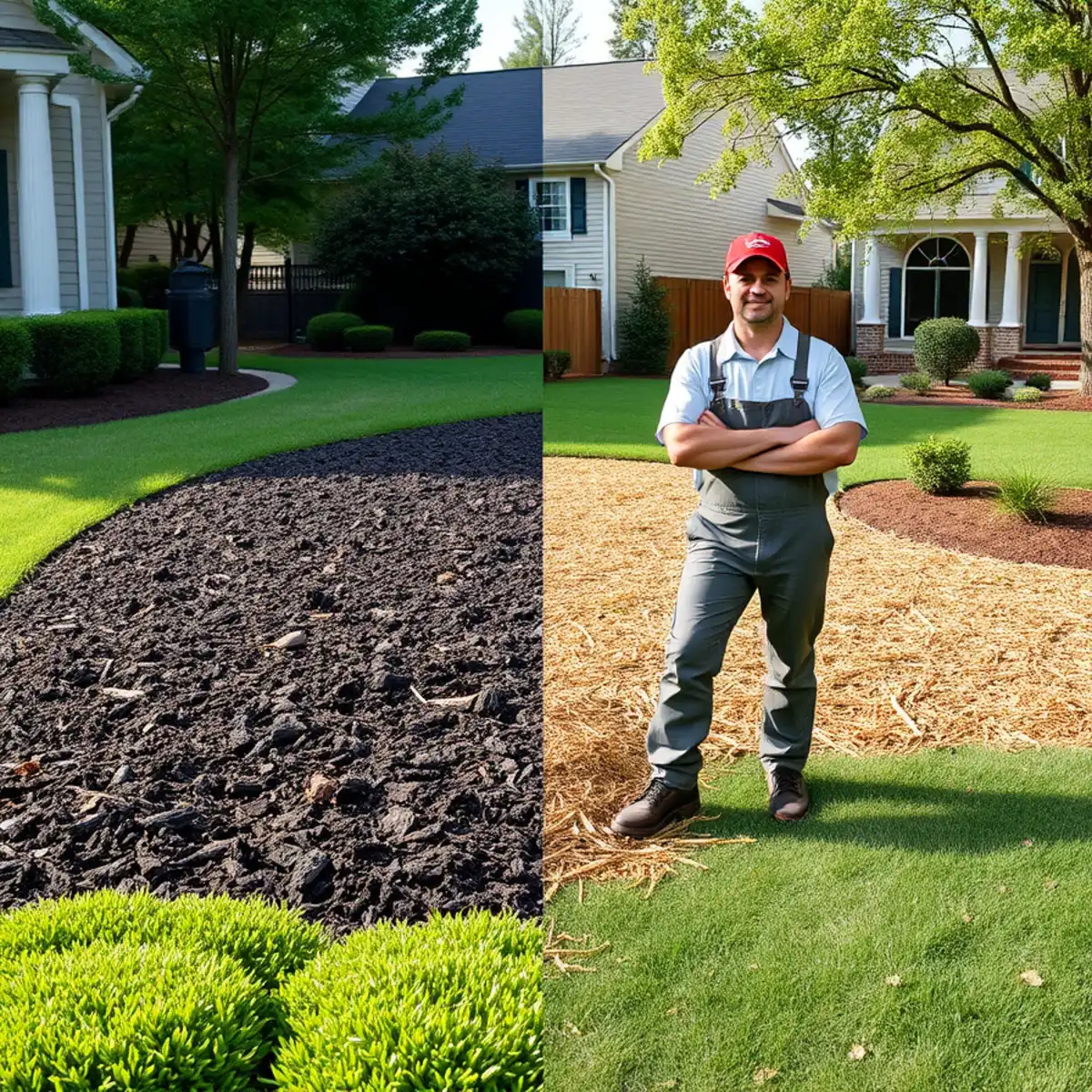
Mulch and pine straw do the same core jobs. Both hold moisture, block weeds, and protect roots through Atlanta's hot summers and mild winters. Both make a tired bed look finished.
So which one belongs in your yard? It depends on your beds, your slopes, your budget, and the look you are after. Here is how the two really compare.
What They Have in Common
Before the differences, credit where it is due. A good layer of either one keeps soil temperatures steady, cuts down on watering, and starves weed seeds of the sunlight they need. Bare beds bake, crust over, and grow weeds. Covered beds do not. Both also soften the look of a landscape, tying beds, trees, and borders together so the whole yard reads as intentional rather than an afterthought. The real choice is about fit and upkeep, not whether you need one at all.
Shredded Mulch: The Pros and Cons
Wood mulch, usually shredded hardwood or bark, is the classic choice for a rich, manicured look.
Where Mulch Wins
- Looks polished. Dark mulch makes green plants pop and reads as high-end.
- Builds soil. As it breaks down, hardwood mulch feeds Atlanta's clay and improves it over time.
- Holds moisture well and keeps roots cool through July and August.
- Great around shrubs, foundation beds, and formal landscaping.
Where Mulch Struggles
- Washes out on slopes during our heavy summer downpours.
- Breaks down faster, so it needs topping off more often.
- Costs more per year than pine straw in most yards.
Pine Straw: The Pros and Cons
Pine straw is exactly what it sounds like, and it is everywhere in Georgia thanks to our pines. It has a looser, more natural look than mulch.
Where Pine Straw Wins
- Cheaper up front and quick to spread over large areas.
- Locks together and stays put on slopes and hillsides far better than mulch.
- Lightweight, so refreshing a bed is fast, easy work.
- Naturally acidic as it breaks down, which azaleas, camellias, and hollies love.
Where Pine Straw Struggles
- Breaks down fast and fades to gray, so it needs refreshing more often to look sharp.
- Does not build soil the way hardwood mulch does.
- Can read as casual, which may not suit a formal front bed.
Which One Goes Where
A simple rule of thumb from years of Atlanta beds: mulch for formal front beds, foundation plantings, and anything you want to look crisp. Pine straw for slopes, big natural areas, tree islands, and acid-loving shrubs. Plenty of yards use both, and that is exactly right.
The Cost Difference Over Time
Pine straw usually wins on the first invoice. It is cheaper per bale and quick to spread. But it breaks down faster and needs refreshing more often, so over a full year the gap narrows. Mulch costs more up front yet lasts longer between refreshes and steadily builds your soil, which is real value in Atlanta's stubborn clay. Think in seasons, not single deliveries, when you compare the two.
How Deep, and How Often
Depth matters more than the material. Too thin and weeds break through. Too thick and you smother the roots you are trying to protect.
- Mulch: 2 to 3 inches deep. Refresh once or twice a year as it thins and fades.
- Pine straw: 3 to 4 inches, since it settles and compresses. Refresh two or three times a year for a clean look.
- Pull the old, matted layer loose before adding new so water still soaks in.
Freshening beds pairs naturally with seasonal leaf removal and cleanup, which is why spring and fall are our busiest mulch seasons.
Figure Out How Much You Need
Buying the right amount saves money and extra trips to the store. Mulch is sold by the cubic yard or the bag, and pine straw by the bale. Measure each bed, length times width, then lean on these rough starting points for Atlanta yards:
- One cubic yard of mulch covers about 100 square feet at 3 inches deep.
- One standard bale of pine straw covers roughly 40 to 50 square feet when fluffed to a fresh depth.
- Add about 10 percent extra for settling, edges, and irregular beds.
The One Mistake That Kills Plants
Never pile either one against plant crowns or tree trunks. Those volcano mounds of mulch around trees trap moisture against the bark, invite rot and pests, and slowly kill the very tree you meant to protect.
Keep mulch and straw a few inches back from trunks and stems. Spread it wide and flat like a doughnut, not high and tight like a volcano. Your plants will thank you for it.
Getting the Look Right for Your Yard
The best beds usually mix both. We might run clean hardwood mulch through the formal front beds in East Atlanta and lay pine straw across the shaded, sloped areas out back. On the rolling lots around Vinings, pine straw holds a hillside that mulch would wash right off during an August storm. If you are planning a bigger refresh, our landscape design and installation team can map out what belongs where. Done thoughtfully, the mix of crisp mulch and natural straw makes even a modest yard look cared for and complete.
Get a Free Estimate on Mulch or Pine Straw
Whether you want the crisp look of fresh mulch or the easy, natural cover of pine straw, we will help you choose and install it right. Call PinStripe Landscaping at (323) 606-0255 for a free estimate. Licensed, insured, locally owned, and no long-term contracts, ever.
PinStripe Landscaping & Pro Svcs
Locally owned lawn care & landscaping in Grant Park, Atlanta. Serving Metro Atlanta for 7+ years.