
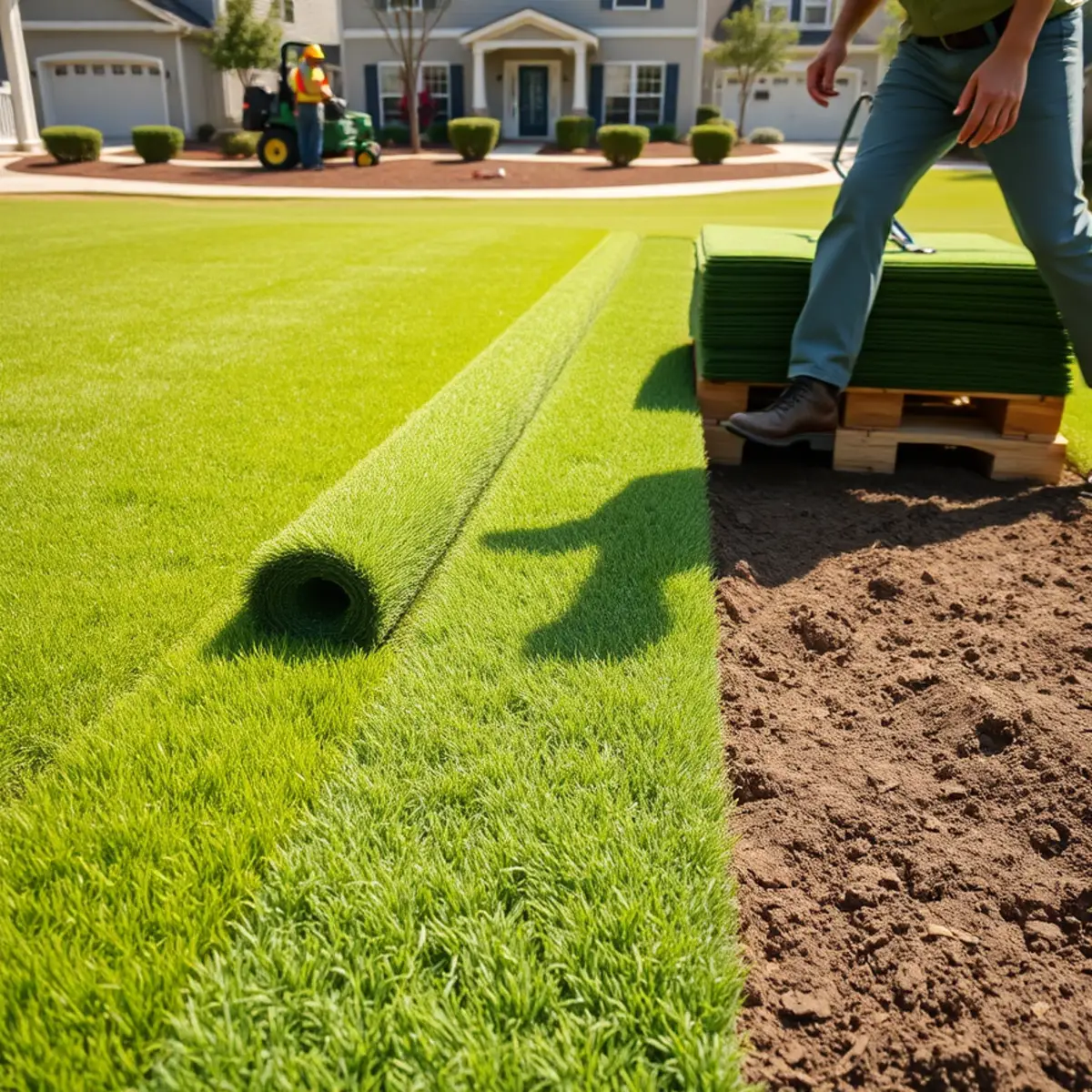
Sod is the fastest way to a finished lawn. One day you have bare dirt or a patchy mess, the next you have solid green turf you can be proud of. But sod only works if you install it at the right time and prep the ground underneath it.
In Georgia, the right timing depends on your grass type, and success depends on what you do before a single roll goes down. Here is how we approach sod on Atlanta's red clay.
Match the Timing to Your Sod Type
Warm-season and cool-season grasses want opposite conditions. Get the season right and your sod roots fast. Get it wrong and you are babysitting dying turf for weeks.
Warm-Season Sod: Bermuda, Zoysia, Centipede, St. Augustine
These grasses love heat. Lay them from late spring through summer, roughly May through August, when the grass is actively growing and roots dig in quickly. You can install into early fall, but give warm-season sod at least a month of warm weather before the first frost so it can anchor.
Cool-Season Sod: Tall Fescue
Fescue is the exception. It roots best in cooler weather, so early fall is prime time, with early spring as a solid backup. Summer-laid fescue sod struggles against the heat and needs near-constant water just to survive.
Do Not Skip the Soil Prep
This is where most sod jobs succeed or fail. Sod laid on hard, unprepared clay roots poorly and dries out fast. The prep matters more than the sod itself.
- Kill and remove the old grass and weeds so they cannot push back through the seams.
- Till or loosen the top few inches of compacted red clay.
- Grade the soil so it slopes away from the house and drains, with no low spots to hold water.
- Work in compost or quality topsoil to feed roots and break up the clay.
- Rake it smooth and firm it lightly so the surface is even before the first roll.
Do not rush this stage to save a day. Every hour you spend grading and amending the soil pays you back in a lawn that roots faster, needs less water, and lasts for years instead of a single season.
Test Your Soil First
Atlanta clay often runs acidic, and sod struggles in sour soil. A simple soil test tells you whether you need lime and what fertilizer to start with. We fold a soil check into our landscape design and installation work so the new lawn starts with the right chemistry.
Lay It Tight and Stagger the Seams
Fresh sod shrinks a little as it dries. Butt the pieces together tight, edge to edge, with no gaps. Gaps dry out, brown, and invite weeds right into your new lawn.
Sod is perishable, so treat it that way. It starts to heat up and yellow on the pallet within a day, fast in summer. Have it delivered the morning you install, keep the rolls in the shade, and get every piece down the same day. Sod that goes straight from pallet to prepped soil roots far better than sod left baking in the driveway all weekend.
Stagger the seams like brickwork so the joints do not line up in long rows. On the slopes and hillsides around Summerhill, lay sod across the grade rather than up and down, and stake it if it wants to slide. Roll the finished lawn to press the roots into the soil for solid contact.
The First Two to Three Weeks Are Everything
New sod lives or dies by water. The roots have not connected to the soil yet, so the sod cannot pull moisture on its own. Your only job is to keep it wet while it knits in.
- Days 1 to 7: water deeply right after install, then keep the sod and the soil beneath it moist every day, sometimes twice on hot days.
- Week 2: start easing off, watering every other day to pull the roots downward.
- Week 3 and beyond: water deep and infrequent to build a drought-tough lawn.
- Tug test: when the sod resists a gentle pull, the roots have taken hold.
In neighborhoods like Kirkwood, summer heat can dry new sod out in a matter of hours, so check it daily and never let the edges curl or gap.
Mow, Feed, and Settle In
Hold off on mowing until the sod is rooted, usually around two to three weeks, when it no longer lifts. Set the mower high and take off only the top third with a sharp blade. Mowing too soon or too low tears the young turf right back up.
Pair the new lawn with core aeration and overseeding down the road to keep it thick, and start a steady feeding schedule once it is established. Sod gives you a head start, but a lawn still needs a plan to stay beautiful.
Sod or Seed: Which Makes Sense
Sod costs more up front than seed, but you buy an instant lawn, erosion control on slopes, and a much wider planting window. Seed is cheaper but slower and fussier. For high-visibility front yards, steep grades, or anyone who wants results now, sod usually wins. We install fresh sod and help you pick the right grass for your light and soil.
Get a Free Sod Estimate
The right sod, laid at the right time over well-prepped soil, becomes a lawn that lasts for years. Want it done right the first time? Call PinStripe Landscaping at (323) 606-0255 for a free estimate. We are licensed, insured, locally owned, and we never lock you into a long-term contract.
PinStripe Landscaping & Pro Svcs
Locally owned lawn care & landscaping in Grant Park, Atlanta. Serving Metro Atlanta for 7+ years.